AHEPA’s annual Journey to Greece program – a cultural immersion initiative which enables high school seniors and college undergraduates to earn up to six college course credits while traveling and learning in Greece, is now beginning its third week in the 2026 program. This week’s re-cap, courtesy of Dina Skias, Director of Student Affairs & Odyssey in Athens Study Abroad Program, and Community Service Learning Coordinator at Webster University Athens reads as the following.
“Last week began with a two-day excursion to the Peloponnese. We started out very early Sunday morning. Luckily, we avoided the traffic rush out of Athens and made our first stop at the Corinth Canal for a coffee/bathroom/photo break. The students enjoyed the large Mercedes bus and were able to spread out and play games during the long trip.
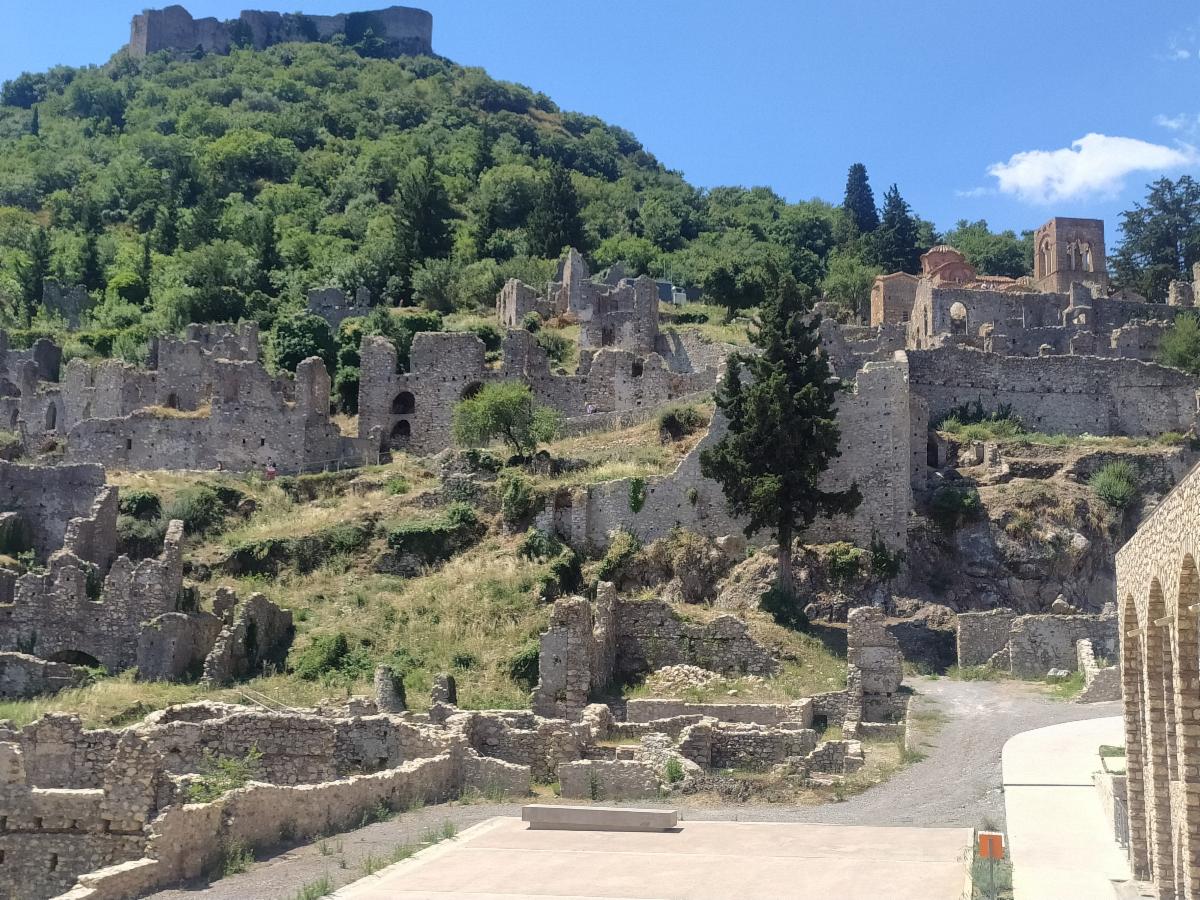
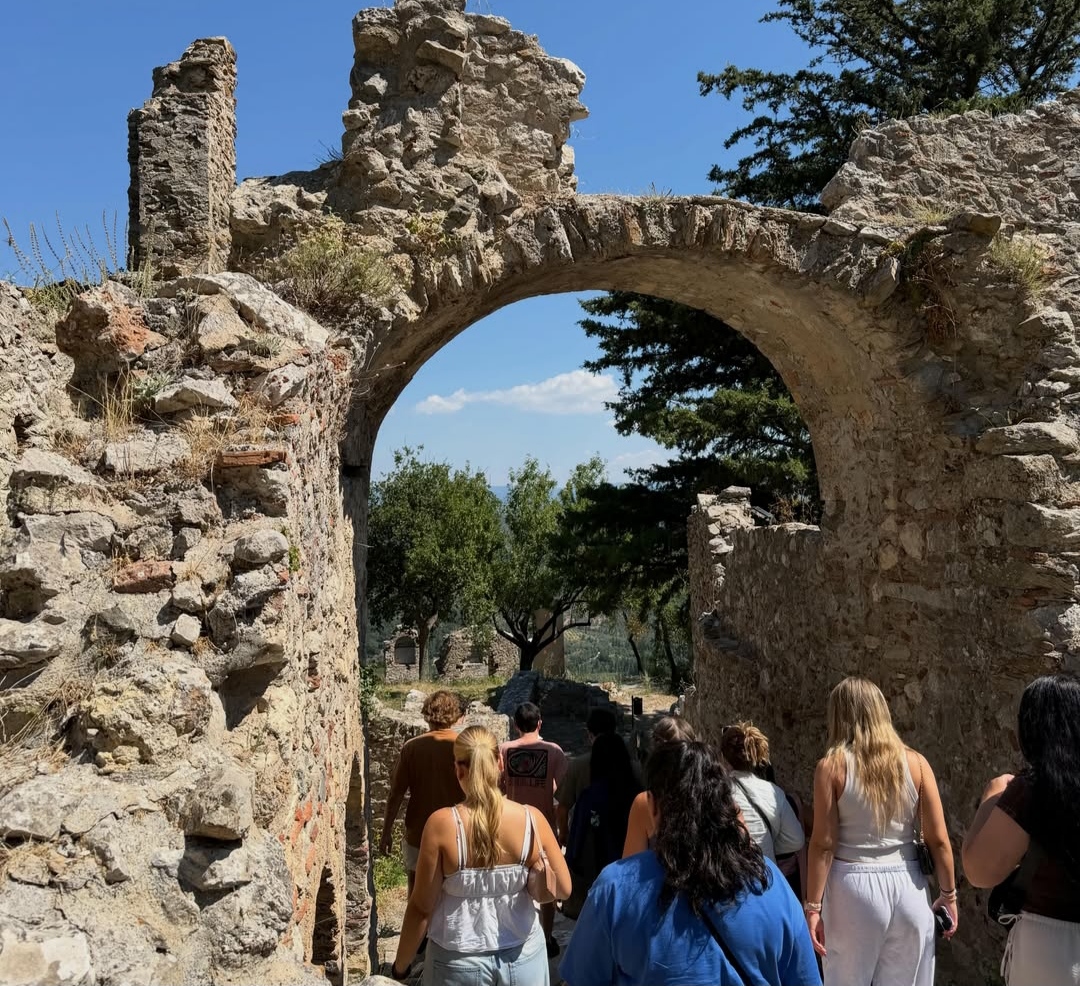
We then traveled to Sparta-Mystras, where the students had the opportunity to explore the Byzantine fortress of Mystra, built in the 13th century. It became the Byzantine capital of the Despotate of the Morea. It is now a UNESCO World Heritage Site. The students enjoyed learning about the history and, for the first time, were able to visit the Palace that had been closed for 42 years. It was newly opened a couple months ago and it did not disappoint the students. It was massive and had multiple rooms with multimedia exhibits depicting life in Byzantium Mystras. The students marveled at the elaborate costumes and the throne room. After visiting the site, we stopped in the village of Mystras for lunch at the traditional Greek taverna, “O Ellinas” – “The Greek”. The food was excellent- made from local products and farms and the students really loved sampling the food here.
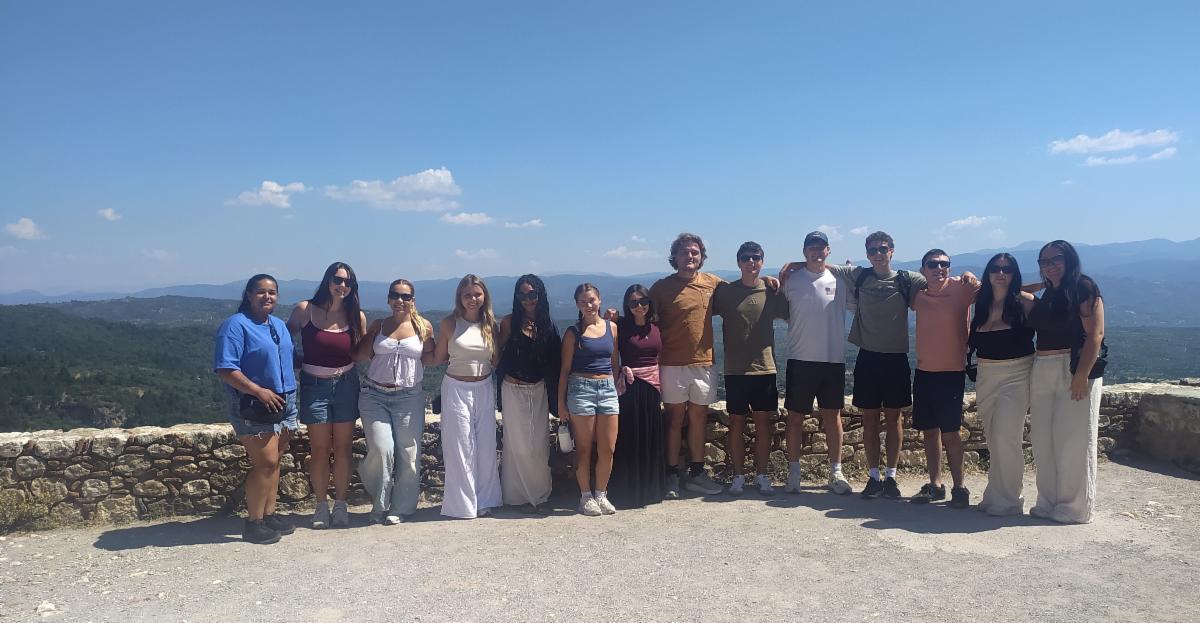
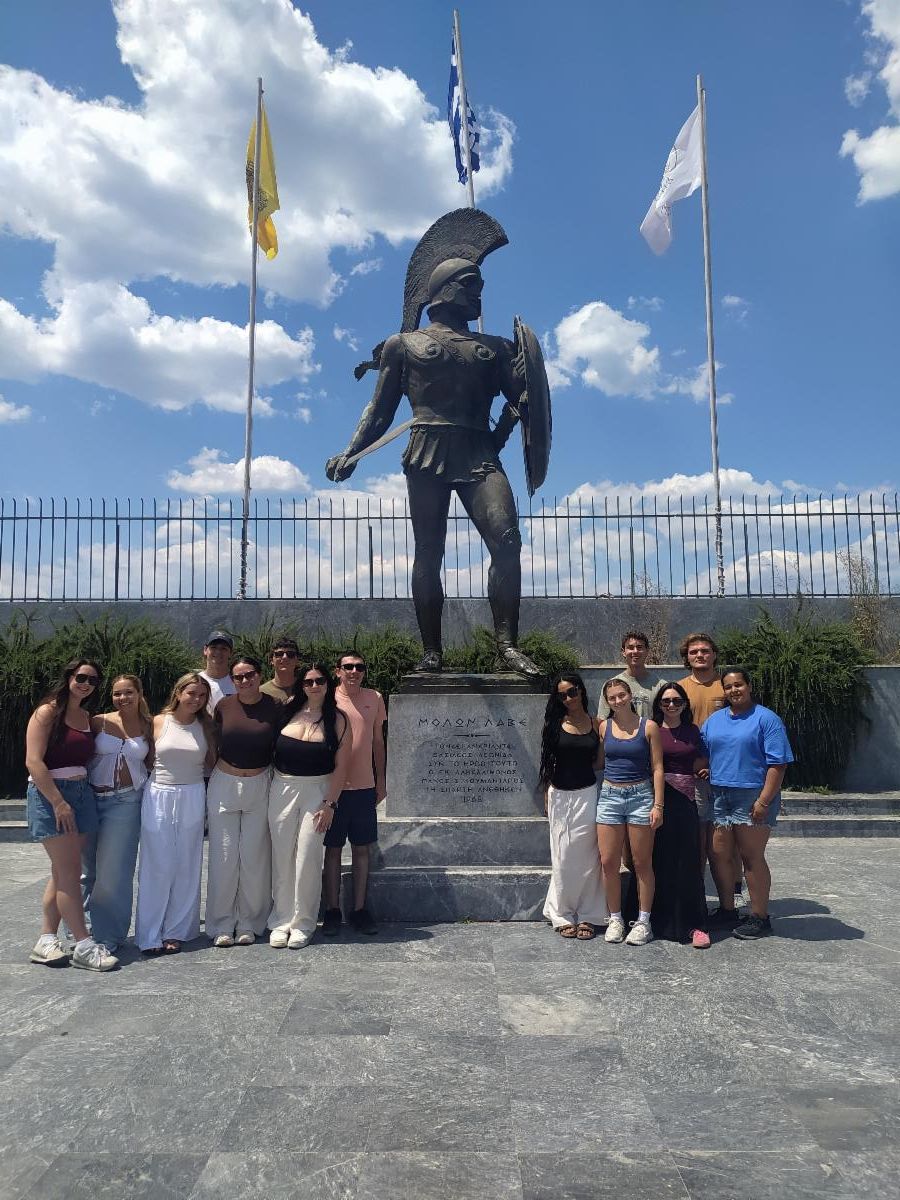
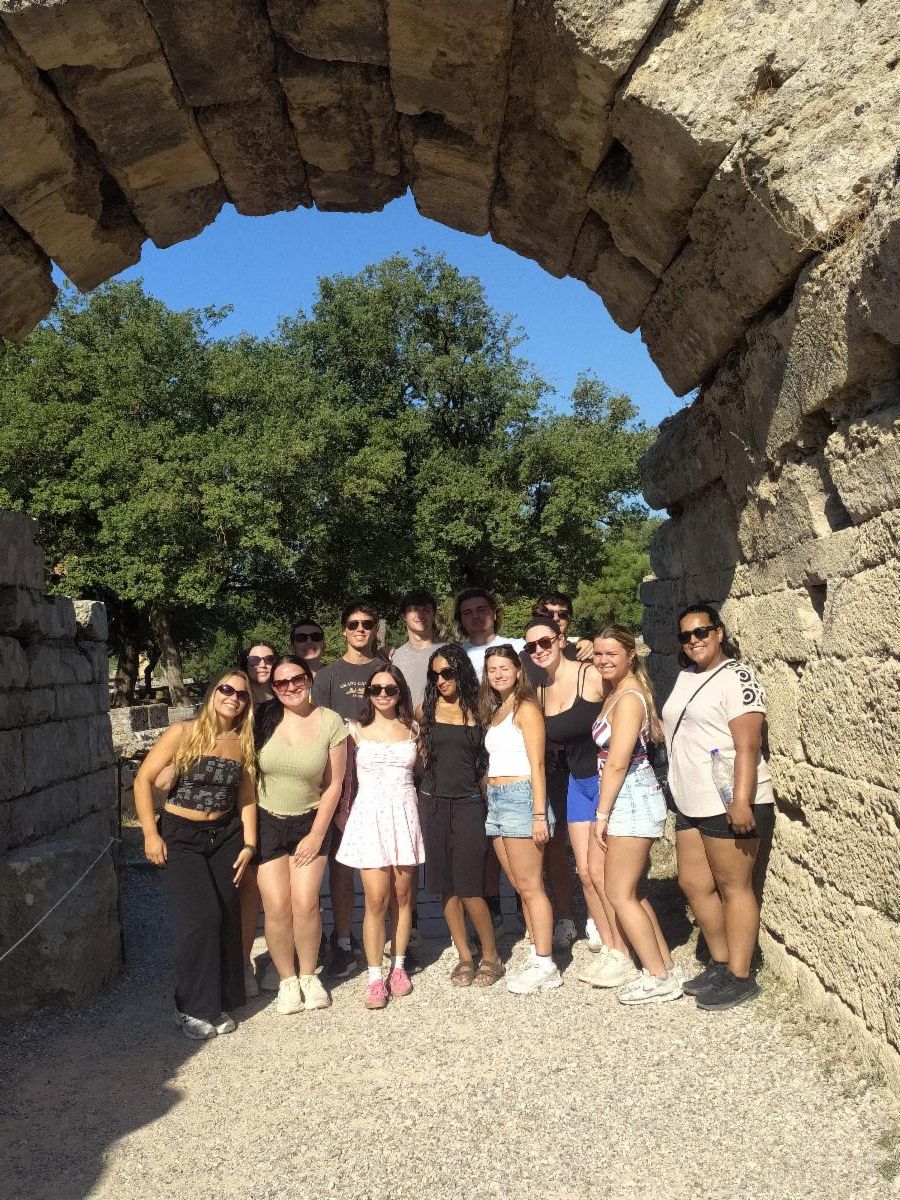
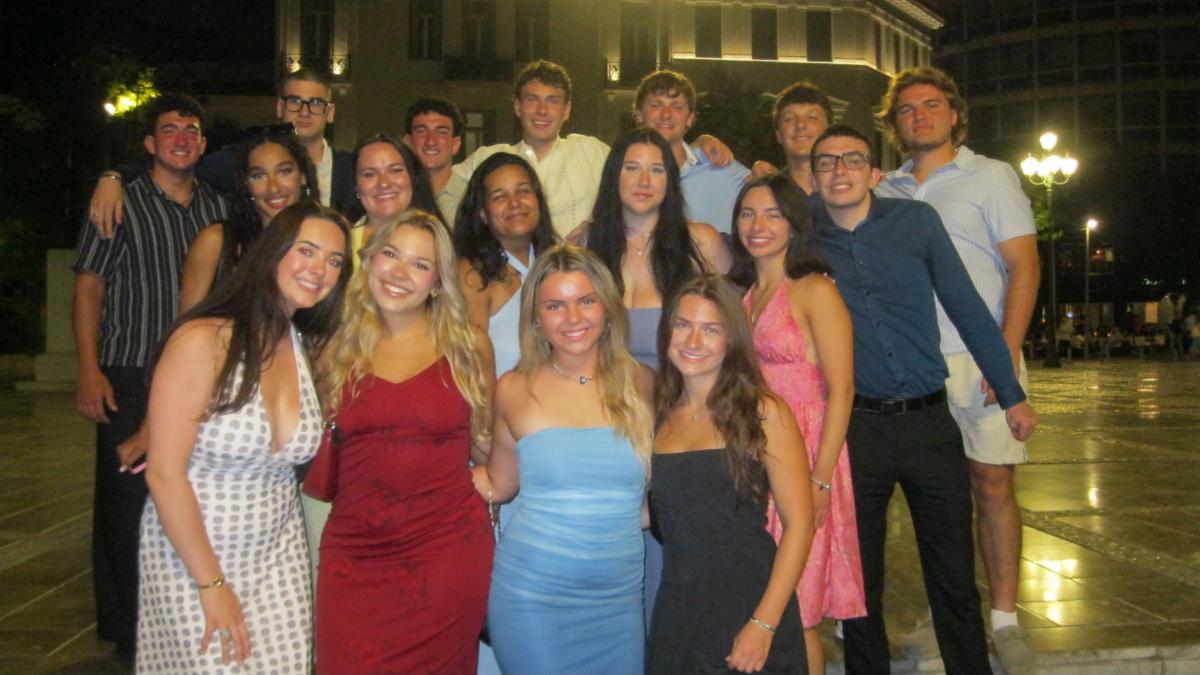
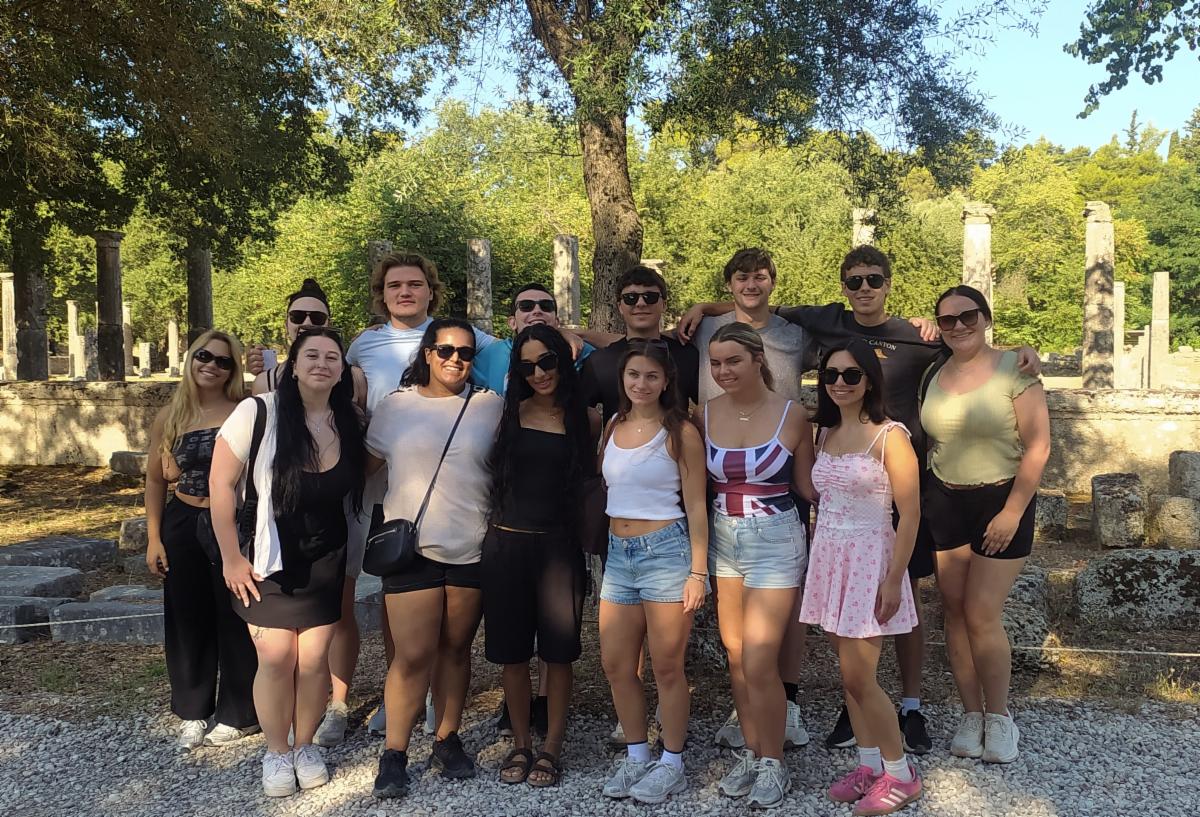
The next stop was Ancient Olympia. Luckily, we arrived in the early evening and the students were able to appreciate a refreshing dip in the pool at the hotel before dinner. It was a great way to cool down after a long journey. After dinner, the students walked a short distance to the town of Ancient Olympia to explore the town. The next morning, after a breakfast buffet at the hotel, we visited the site of Ancient Olympia. We went early in the morning to avoid the hot sun. After learning about the history of Ancient Olympia, the students were free to explore the site on their own. Of course, we couldn’t go to Olympia without the epic run. So, several of the boys decided to race. Andrew Raikos came in first place, with Leonidas Bakalis following a few steps behind. The students praised all the runners, and the tourists who were there also applauded them.
After the site visit, the students were able to explore the museum, as well. We went for lunch all together at another traditional Greek taverna, “Ambrosia”. The students really enjoyed the food at this taverna. It was again with local products from farms in the area. After lunch, they were able to walk around the town and visit the museum of Archimedes, the famous Greek mathematician and physicist to learn about his inventions. We departed Olympia in the early afternoon and drove by Patra on our return to Athens.
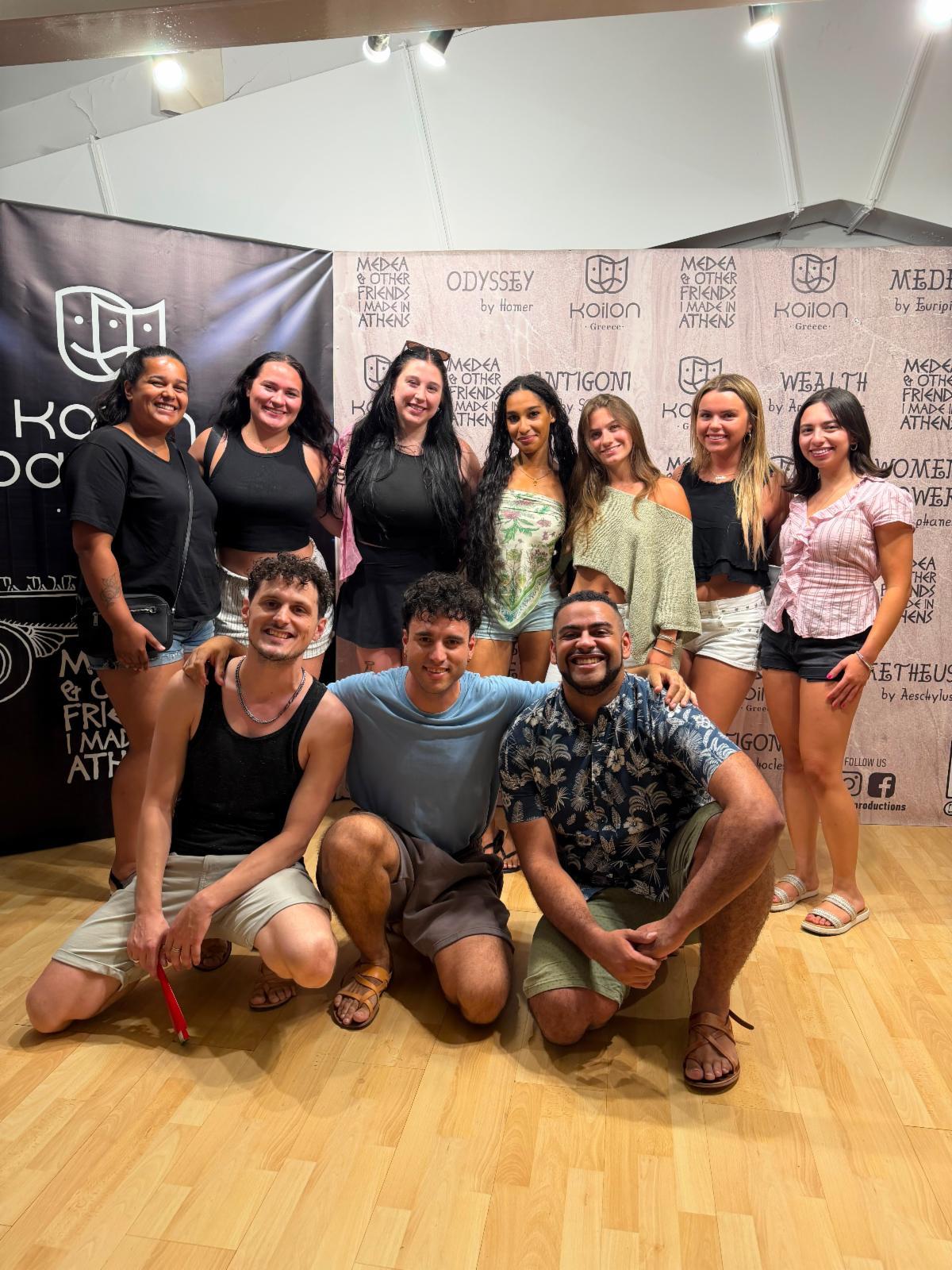
The next few days, they focused on their classwork. On Tuesday and Wednesday evening after class, they broke up into two groups and were treated to a theatrical performance at the Webster Athens Cultural Center rooftop terrace (with the view of the Acropolis behind them) entitled, “Medea and Friends I Met Along the Way” by the theatrical company, Koilon. (https://www.koilon.gr/) It’s a comedy in English about a tourist who falls, hits his head, and loses consciousness. When he wakes up, he is in ancient Greece and comes across characters from the ancient Greek tragedies and mythology.
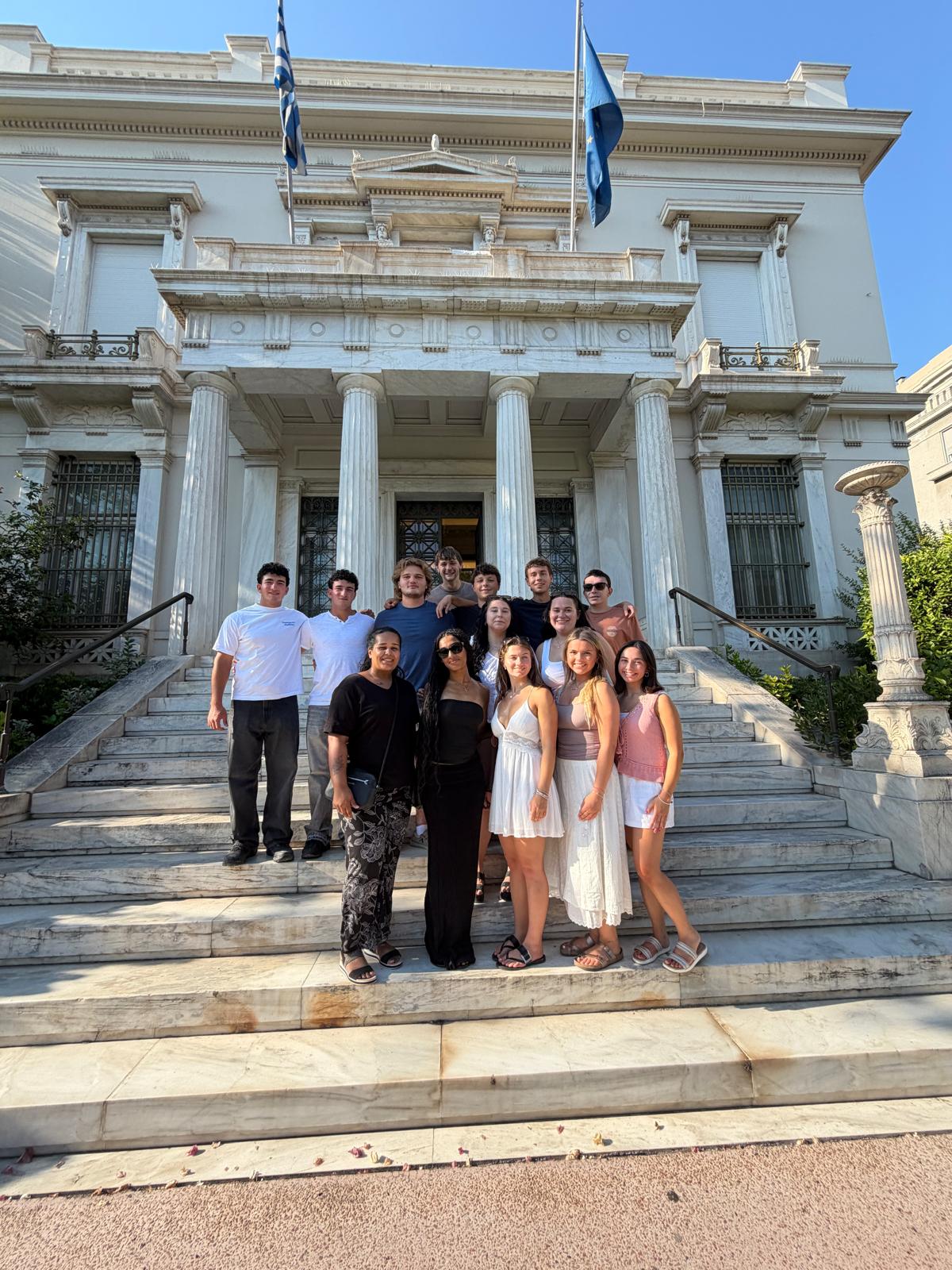
Then, on Thursday we went on a “peripato” – “walk” on our way to the Benaki Museum. We first stopped at the Hellenic Parliament for the changing of the guards. After a group photo, we walked up the famous, most expensive and protected street in Athens, Herodou Attikiou Street, behind the National Gardens. We stopped at the Presidential Palace, where the President of the Hellenic Republic greets guests and the Megaro Maximou, where the Prime Minister works. The students learned a little about their roles and how they are elected. Then, on our way to Benaki Museum, we walked past the Evzone (Presidential Guards) barracks, where the guards live and train. They learned about the guards and their duties. We then visited the Benaki museum, where they were able to view Greek works of art from prehistorical to modern times. They particularly enjoyed the Byzantium section and the area with traditional Greek costumes. It was a very busy week and it went by quickly. Today, they have a free day, as they prepared for the three-day trip to the island of Naxos. They are really looking forward to this, as it’s supposed to be very hot this weekend.”